Hey there, and welcome to my corner of the internet!
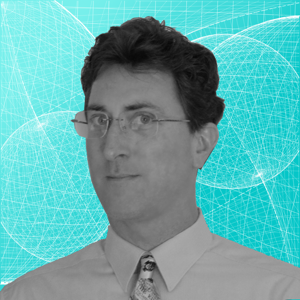
I’m Mike Johnson, and I’ve decided to start this blog as a kind of public diary for my tech explorations. If you’ve stumbled across this site, you’re probably here because we’ve crossed paths somewhere in the software world, followed my link from LinkedIn, or maybe you’re just curious about what a lifelong technologist gets up to when curiosity strikes.
What This Blog Is About
I tend to post most often about programming languages and code—it’s where I live and breathe professionally—but my interests wander into interesting territories like quantum computing, cryptography, and computer architecture and assembly language. Think of this as my learning lab, written out loud. I’m approaching each topic with curiosity and a beginner’s mind, even after three decades in the field. Because that’s when the best learning happens.
The tone here will be casual and positive. No corporate speak, no pretending I have all the answers. Just genuine exploration, mistakes included.
What Drives Me
If you’re going to read my ramblings, you should probably know what makes me tick.
Mentorship matters to me. Throughout my career at places like Amazon, GEICO, Jefferson Lab, and Sun Microsystems, I’ve found that some of my proudest moments aren’t shipping features—they’re watching junior colleagues level up. When students or coworkers get unblocked and suddenly get it, that’s my favorite moment. I taught as adjunct faculty at Christopher Newport University for fourteen years, and my students knew they could always come to me for help, whether it was related to class or not. Some of my student reviews said I was “a total nerd” and “totally into geeking out”—guilty as charged. Others said I was “always happy to help outside of the class, even if it’s not related to the course.” That’s exactly how I want to show up for people.
Collaboration is everything. At work, I’m known for building bridges between teams. I assume good faith, share information freely, and genuinely want all teams to succeed together. Some of my best work has happened when I’ve helped connect the dots between groups that didn’t even know they needed each other.
Always learning. I’m endlessly curious, especially when it comes to science, math, and technology. Whether it’s diving deep into Rust and Go, listending to Stanford AI classes on YouTube, or bootstrapping new services in AWS, I want to understand not just how things work, but why. That curiosity has taken me from writing device drivers for Sun’s HPC systems to implementing Chinese cryptographic algorithms in AWS KMS to architecting PKI services at GEICO. Every problem is a chance to learn something new.
Science is real. It feels strange that I need to say this in 2026 to anyone, anywhere, so much more so on an engineering site, but it’s both true and necessary. Science is the foundation of technology and engineering. Nobel-winning physics papers on quantum mechanics lead to better LED monitors. Discoveries in genomics and evolution lead to better vaccines and safer food supply chains. Mathematical proofs lead to new cryptographic algorithms and better security when browsing the Internet. But even when science gives us problems instead of solutions, it is equally real, and equally right. Global warming is an existential threat. Worldwide pandemics will decimate populations unless we improve vaccines, and, just as importantly, vaccination rates. Whether we like it or not, the world is a complex place. Luckily, scientists excel at understanding the complexities and sharing their knowledge with the rest of us.
Inclusion matters in engineering. If your organization lacks diversity, they are exluding valuable talent and overlooking opportunities to build a better team. One of the toughest places I ever worked was Amazon. And yet, even in a performance-driven division like Amazon Web Services, diversity and inclusion were essential in everything we did. Taking intentional actions towards including a more diverse population, by race, religion, gender, and sexuality, will improve the morale of your team and focus them more on finding solutions for tough problems.
A Bit About Me
I’ve been writing code professionally for thirty years, and honestly, I’m just getting started. My journey has taken me through some incredible places:
I began my career at Jefferson Lab (Thomas Jefferson National Accelerator Facility), where I managed high-speed data acquisition systems for nuclear physics experiments and later developed control system components for particle accelerators. It was existing and cool to write code that helps scientists probe the fundamental nature of matter.
At Sun Microsystems, I worked on high-performance computing systems, creating benchmarks and instrumentation to squeeze every ounce of performance from parallel CPUs and distributed memory. I even contributed to HPC conference papers and authored research on scientific numerical library performance. The work involved improving Unix kernels and device drivers—low-level stuff that taught me to respect every CPU cycle.
My time at Amazon was spent on cryptographic security systems at massive scale, supporting AWS with HSM-backed services. I drove the implementation of cryptographic algorithms, conducted security audits with cryptography experts, and became the go-to person for investigating new platforms to simplify our code stack. I also ran tech talks on Rust to get developers and managers excited about memory safety.
Currently, I’m at GEICO as a Senior Staff Software Engineer, where I helped design and implement a custom PKI service for microservices and hosts, developed features in Go, and built CI/CD pipelines for Kubernetes deployments.
I also served as adjunct faculty at Christopher Newport University from 2006 to 2020, teaching software development, design patterns, databases, computer architecture, and mathematics. I’m currently a member of the School of Engineering and Computing’s Industry Advisory Board at CNU, where I get to help shape the next generation of engineers.
My academic background includes a BS in Mathematics and an MS in Physics, both from Christopher Newport University, with concentrations in computer science, physics, instrumentation, and advanced computing systems.
What’s Coming
I’ve got a backlog of ideas I want to explore here: diving deeper into Rust, Go, and assembly language; exploring quantum computing concepts; playing with cryptographic protocols; maybe even some computer architecture deep dives. I’ll share code, experiments, things that worked, things that didn’t work (probably more interesting than things that worked), and whatever else catches my attention.
I’m also planning to upload some of my older papers from my Sun Microsystems and Jefferson Lab days. Looking back at work from years ago is always an interesting exercise in seeing how far we’ve come—and how some fundamental problems remain the same.
Let’s Connect
If anything here resonates with you, or if you want to chat about any of these topics, reach out! You can find me at mikejfromva@gmail.com or connect with me on LinkedIn . You can also join the discussion in the comments below.
Thanks for stopping by. Let’s learn something together.
— Mike